

September 14, 2026
New Cobblestone … I had no idea!
Verona, Italy
In my mind, I kept thinking, cobblestone must be such a blast from the past and something that cities just have to deal with as they modernize and go into the future. I was SO wrong. Maybe it was this at first as people used river rock to build more sanitary conditions for waste water and better passage for wagons, but over time, it changed.
Cobblestone is a form of art.
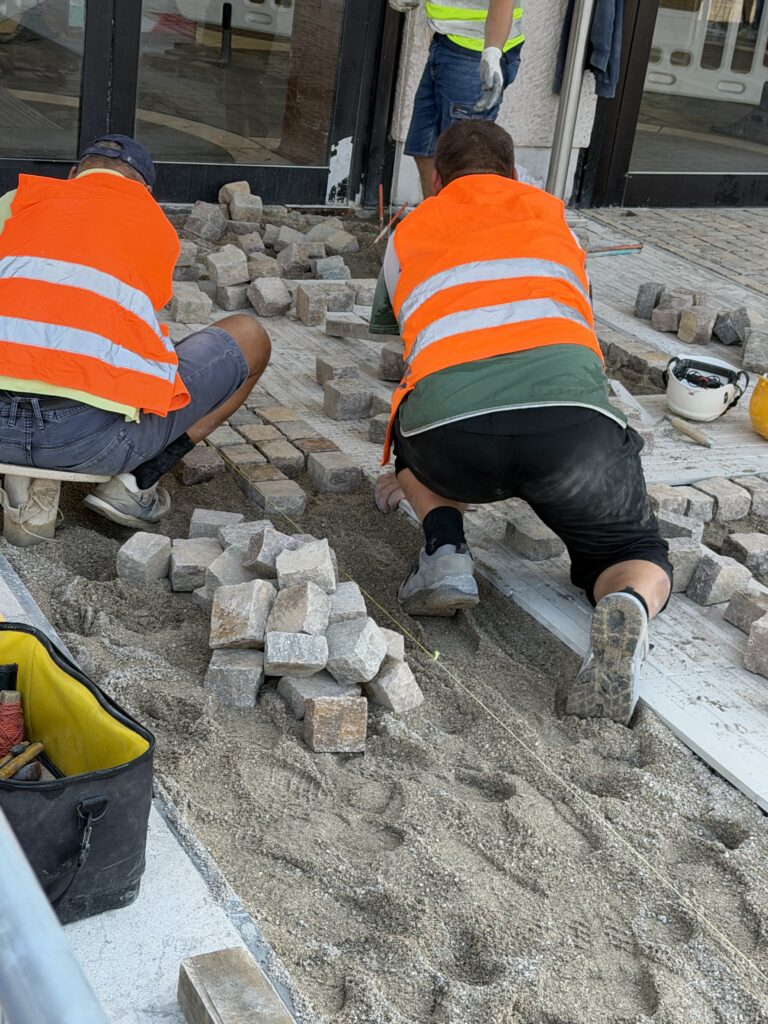
Even in new construction, there are big workers placing teeny tiny stones with small hammers so their pattern matches one from hundreds or thousands of years ago. In the movement from Rome to Verona, there are many similarities in the cobblestone streets. During the renaissance, a focus on design gave new meaning to how a piazza might be laid out or how streets might weave through various areas of town. In the beginning, round and cobbled rock was laid to keep wagons from sinking into the mud. But now, it is a way of preserving the magnificence of cities. Verona’s historic streets are famous for combining dark volcanic basalt, dark river stones, and a world-renowned local pink-red limestone. The stones seen here being set into artful rows to “repave” the sidewalk are in front of the Verona train station.

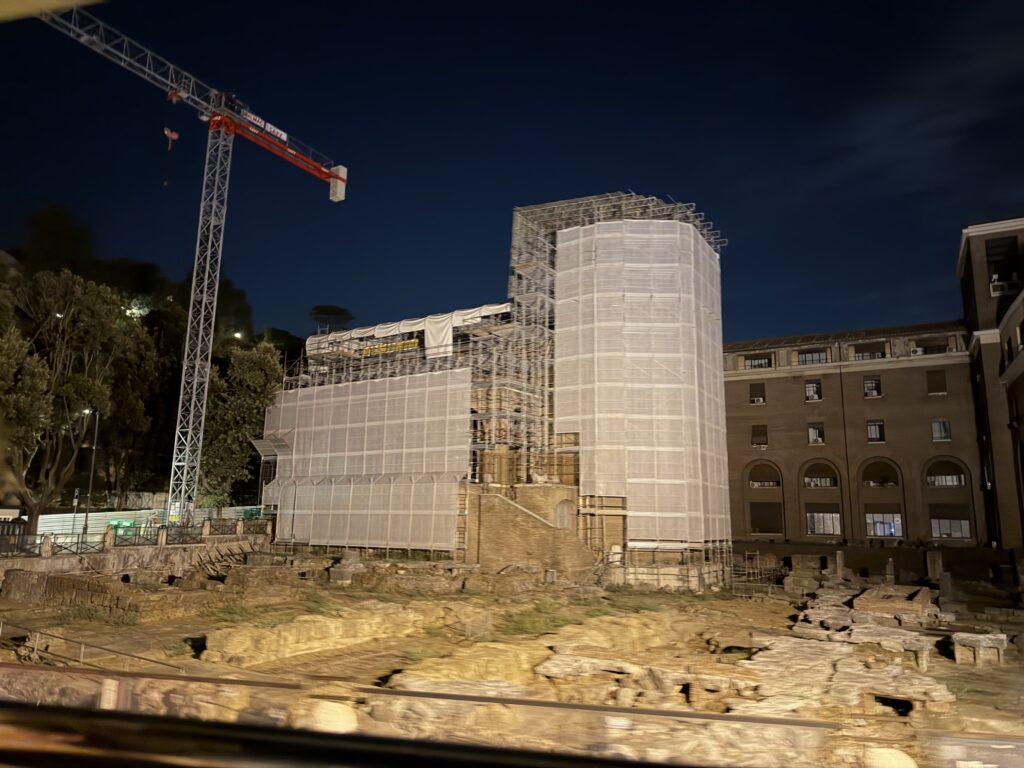
Just as many of the villages and towns are built of stone, they essentially are building for the long haul. The version of modern history (taught in the U.S.) is a mere 250 years old, and here, we are talking 2500 years old (just for the modern version). Every stone house and building is still occupied and most are fully updated with heat pumps and new electrical. They are painted bright colors and have electronic storm (and sun) shutters on the outside to protect the windows. It is heartening to be in a country that maintains and preserves without discarding or using cheaper materials. The pride of craftsmanship shows everywhere you step.
No responses yet