October 16, 2026
The Dalmatian Coast
Croatia
The beauty of the islands of Croatia is as epic as the history. There are over 1000 islands along the Dalmatian Coast. Forty-seven of them are populated. I will write about the ones we visited while aboard our week-long cruise up the coast. We were pleased with Kompass Cruises and our boat, The Prestige. In mid-October, we had 2 grey days, 1 rainy day, and 5 perfectly sunny days. The final day was back on land, in Trogir and Split, which I will include as part of this coastline tour.
Korčula
6th largest island
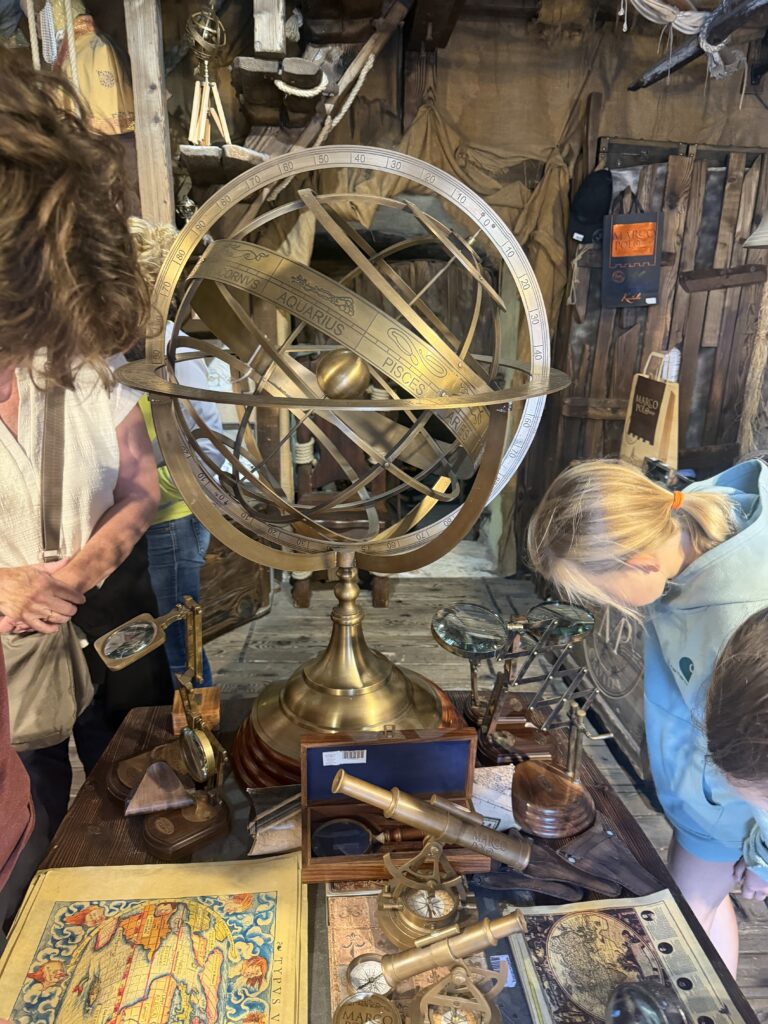
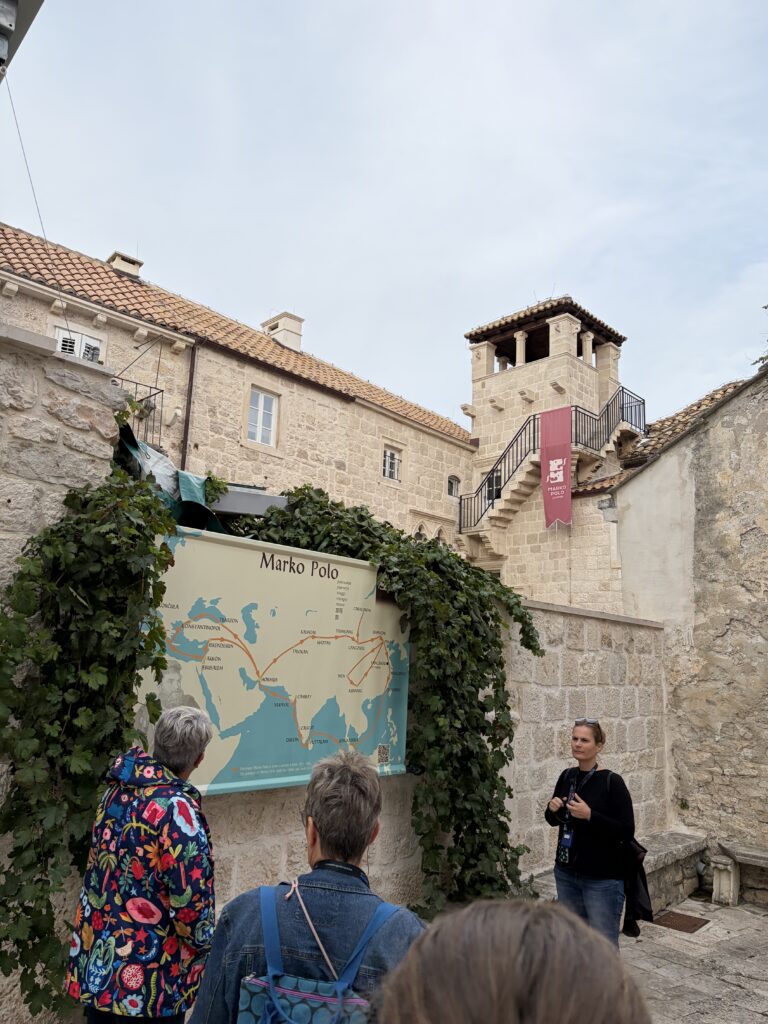
Very cute – the mini Dubrovnik! It was the windiest night of the whole trip as we walked around the outskirts of the town Korčula, on the island of the same name. It is common to name the main town after the island. The wind lasted three days and came from the north, called the bura wind, which is their colder wind pattern. This wind can come in bursts and will often be followed by clear and bright sunny days. In our case, this exact weather pattern occurred. We engaged in a walking tour of the town, learning that the streets were built with a curving pattern to block the wind and make the town streets and center more calm during the wild weather. The island takes pride in claiming Marko (and Marco) Polo as their own exploring son. We bought a compass there as a souvenir.
- History: Korčula was founded by Greek settlers who named it Korkyra Melaina (Black Corfu) due to its dense pine forests. In 1298, a major naval battle took place off its coast between Venice and Genoa; locals fiercely claim that explorer Marco Polo was born here during this Venetian era.
- Culture: The island is famous for the Moreška, a traditional, highly choreographed sword dance that reenacts a battle between a White King and a Black King over a captured princess. It has been performed here since the 17th century.
Hvar Island
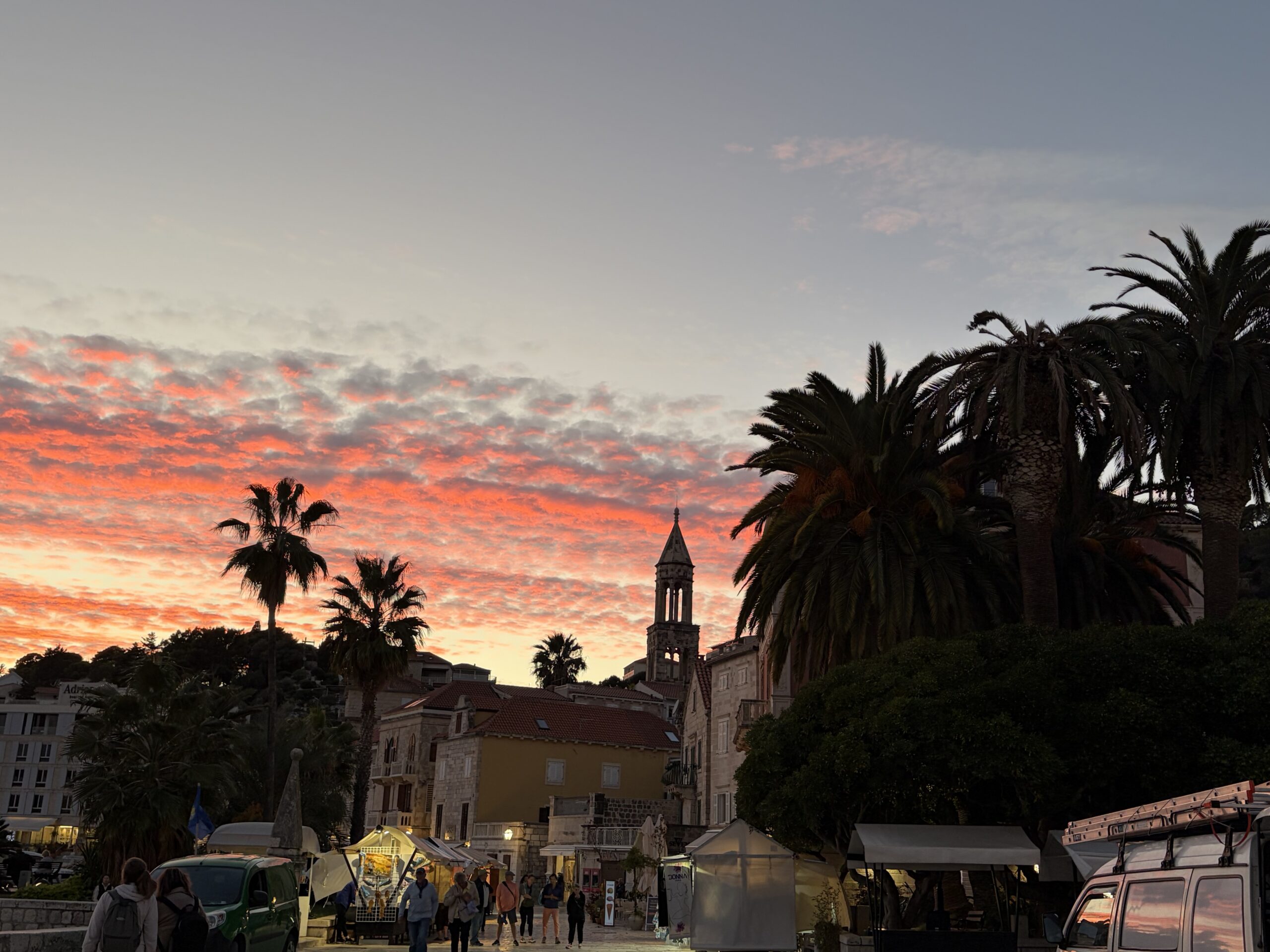
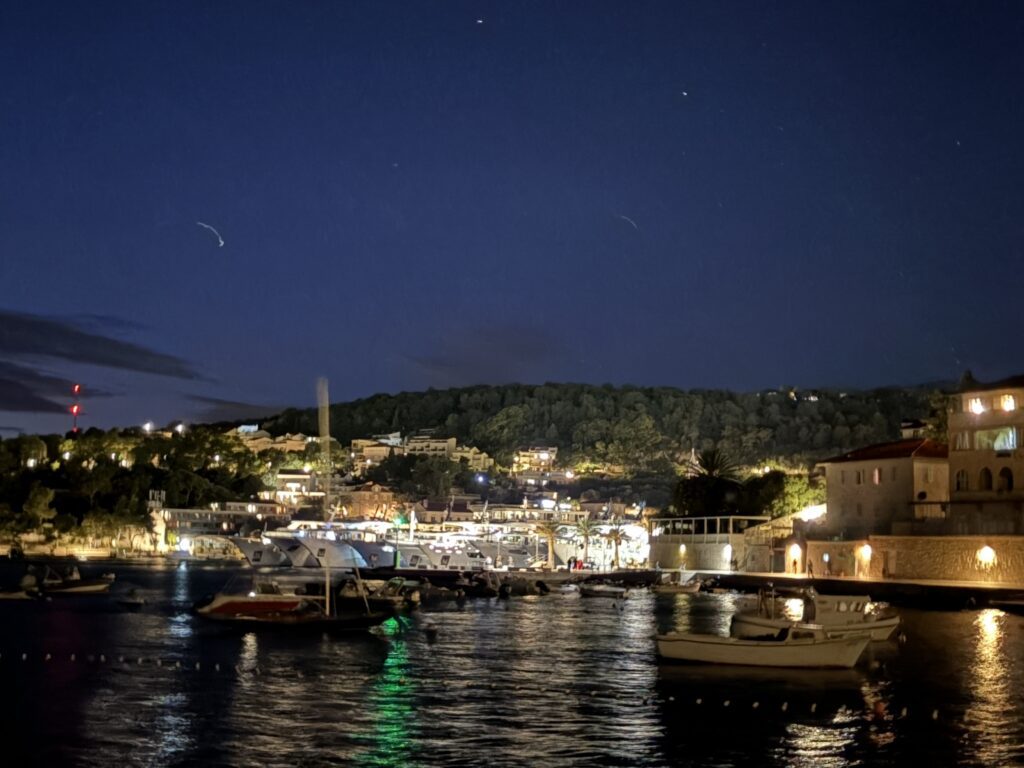
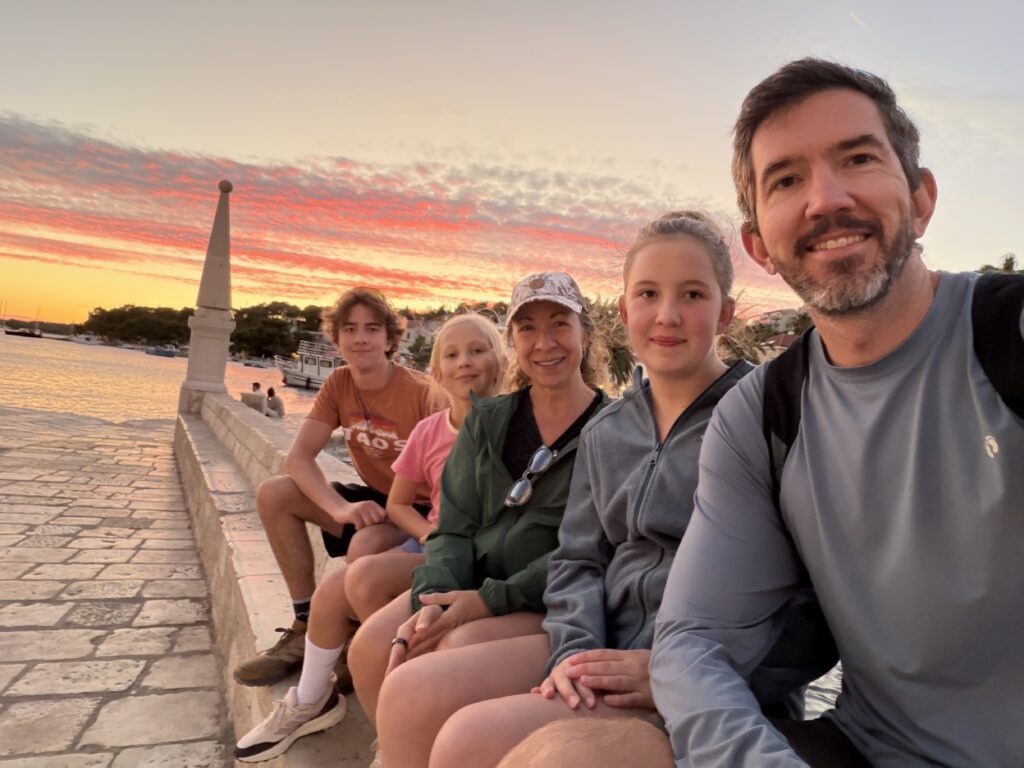
This island has it all – sunny days, party nights, beautiful beaches, castles, lace-making, and more! We only spent one afternoon and evening on this lively island, but you could certainly entertain yourself here for a week or more. We chose to walk to a beach – and not knowing what to expect, it is always a surprise when you arrive – about a mile away from town and showing off a beach of smooth white stones. It was absolutely stunning and a perfect respite for sunset. During our walking tour, we learned about the cloistered nuns who make lace out of the threads of the agave plant. We walked past their convent and continued on to see the fort on the hill and Napoleon’s viewpoint even farther up on the hill. The town square is picturesque with a theater, museums, and churches (of course). The riva area is full of yachts and palm trees and it is rumored that all the Hollywood stars come here for vacation. It has many influences as it was built over time (the buildings are the marks of the ancient influencers). We really enjoyed exploring the small part of Hvar we were able to see.

A few other tidbits:
- June-Sept no rain in Hvar – and it stays near 30 C
- A little rain in November
- Protected from cold winds and stays mild all winter – it is a micro climate (but not on the northern side – that side is more humid with rain)
- SUNNIEST SPOT in Croatia
- Production of wine, olive oil and fishing (with tourism later)
- 318 years under Venetian rule (1400s – 1700s)
- Built up in 15th and 16th century
- 1868 organized tourism (at first, people visited in winter to heal their problems)
- History: Originally settled by Neolithic people, the island became the ancient Greek colony of Pharos in 384 BC. It later flourished under the Republic of Venice as a crucial naval base. During the 15th to 17th centuries, Hvar became a major center for Croatian Renaissance literature.
- Culture: Hvar boasts Europe’s oldest public theater, opened in 1612. It is also home to the UNESCO-protected Za Križen (Following the Cross) procession—a night-long religious tradition practiced for over 500 years.
Mljet Island
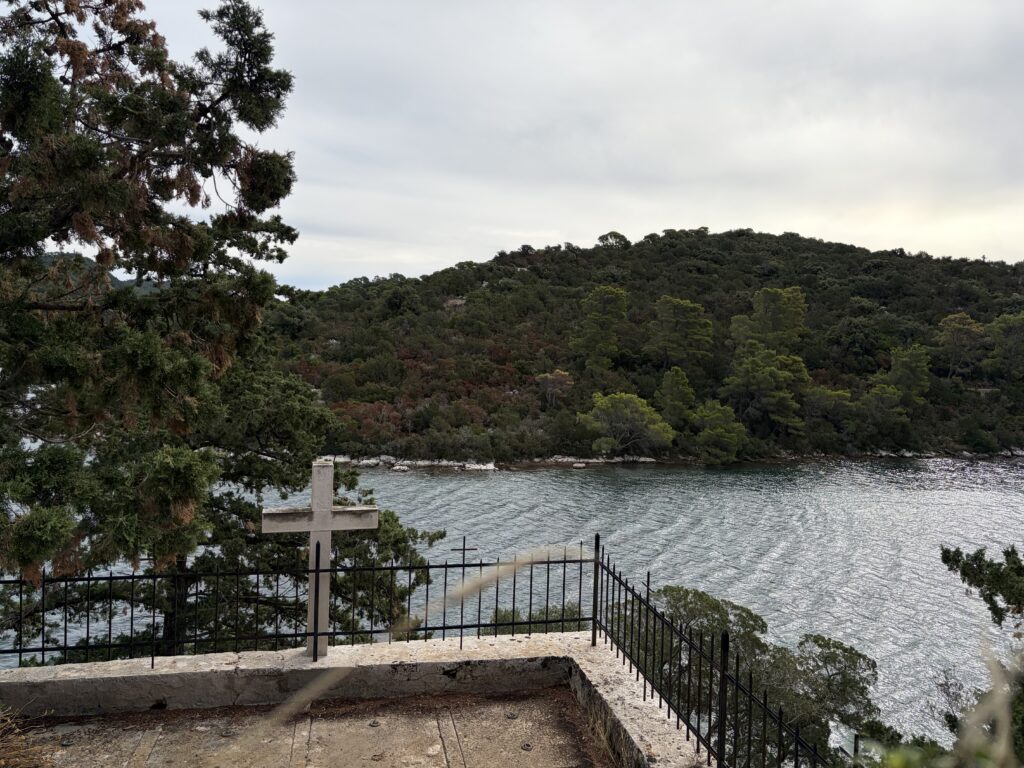
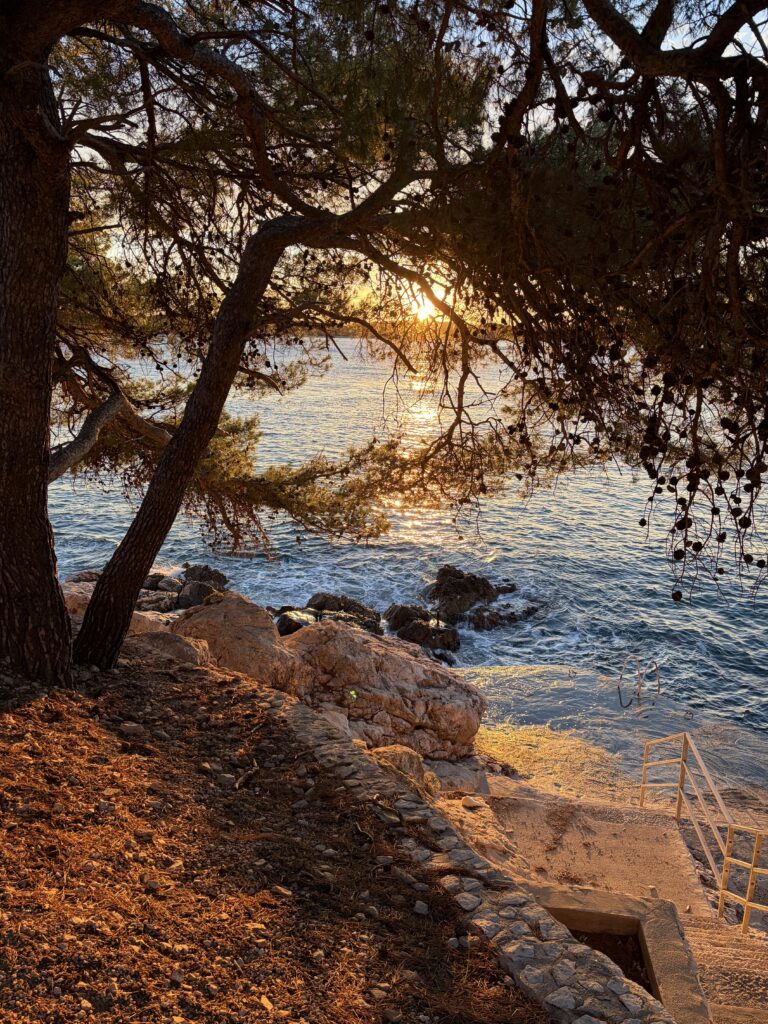
A green, tranquil island where a large part is designated as a National Park, featuring two interconnected saltwater lakes, a central islet with a Benedictine monastery, and dense forests. Our boat docked here briefly so we could take another boat across the lake to visit the islet with the monastery. It is truly remote. The monks learned to farm the land and live on this wild island, now a National Park due to its natural beauty. There were many people biking around the island which we would have done if we had more time. I am not sure we would spend half a day’s time getting to this island for the small tour around the monastery if we were to come again. I would skip this island unless you had a whole day to hike or ride bikes.
- History: Mentioned in Roman records as Melita, legend says Mljet is the mythical island of Ogygia, where the nymph Calypso held Odysseus captive for seven years. In the 12th century, Benedictine monks took control of the island, building a secluded monastery in the middle of a saltwater lake.
- Culture: The culture of Mljet is deeply tied to folklore, isolation, and a respect for nature. For centuries, the Benedictine monks managed the island’s ecosystem, establishing a legacy of environmental preservation that continues today through its National Park status.
Vis Island
This island was the most coveted as it was the highest island – you can see Italy and the coastline from many points on the island. The importance of the water-ways for trade can not be emphasized enough. Throughout history, it changed hands many times with strategic battles for control of its ports and passageways. The two main towns are Vis and Komiža. We did not have time to go across to Komiža, a 25-minute taxi ride across the saddle of the island. Instead we chose to rent mountain bikes for an hour to ride through the town and to a nearby beach with crashing waves and massive rocks. We shopped and walked through the charming town and jumped into the water at another nearby swimming beach. The movie Mama Mia 2 was filmed in the town of Vis, a completely picturesque town of 1300 residents.
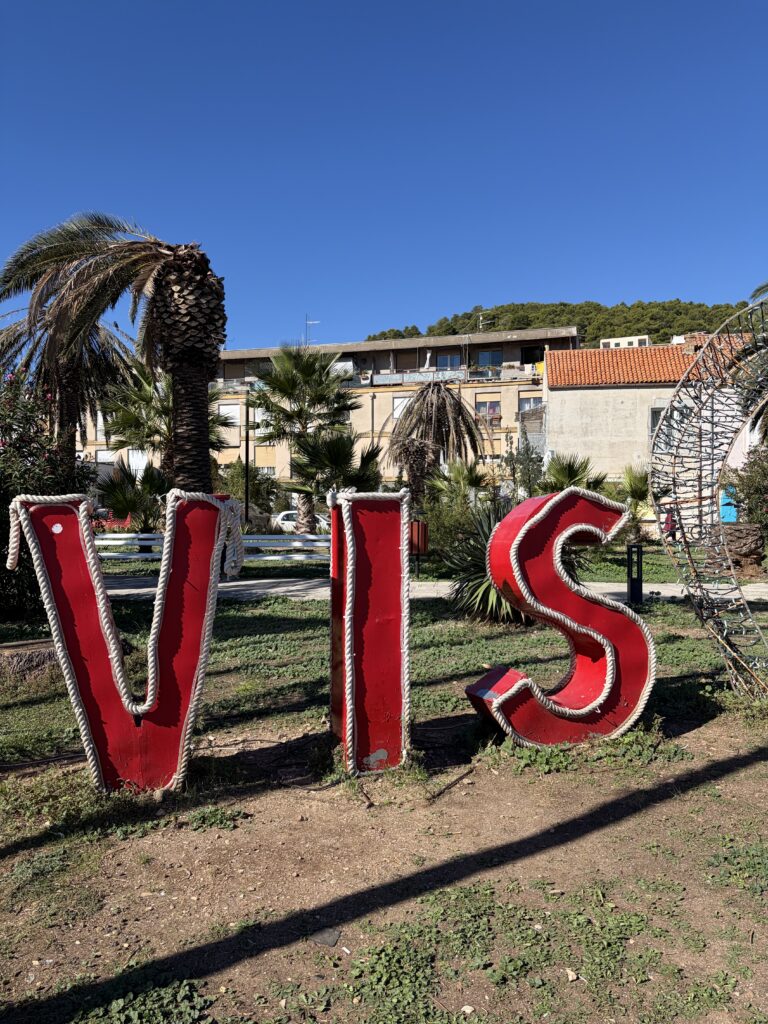
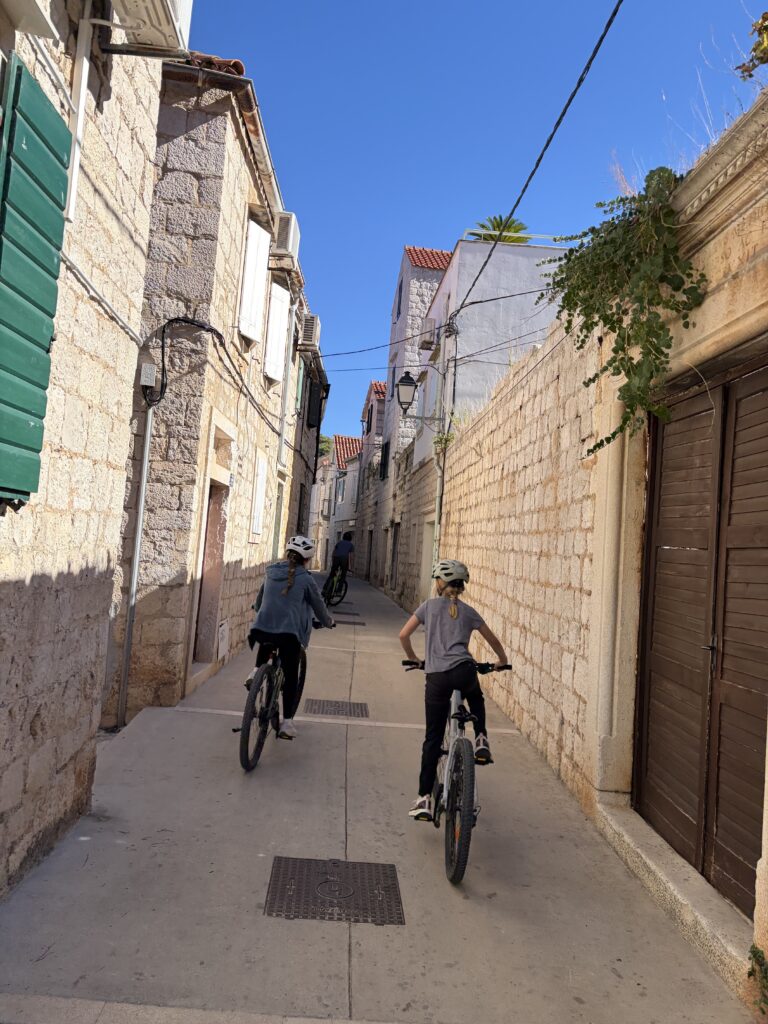
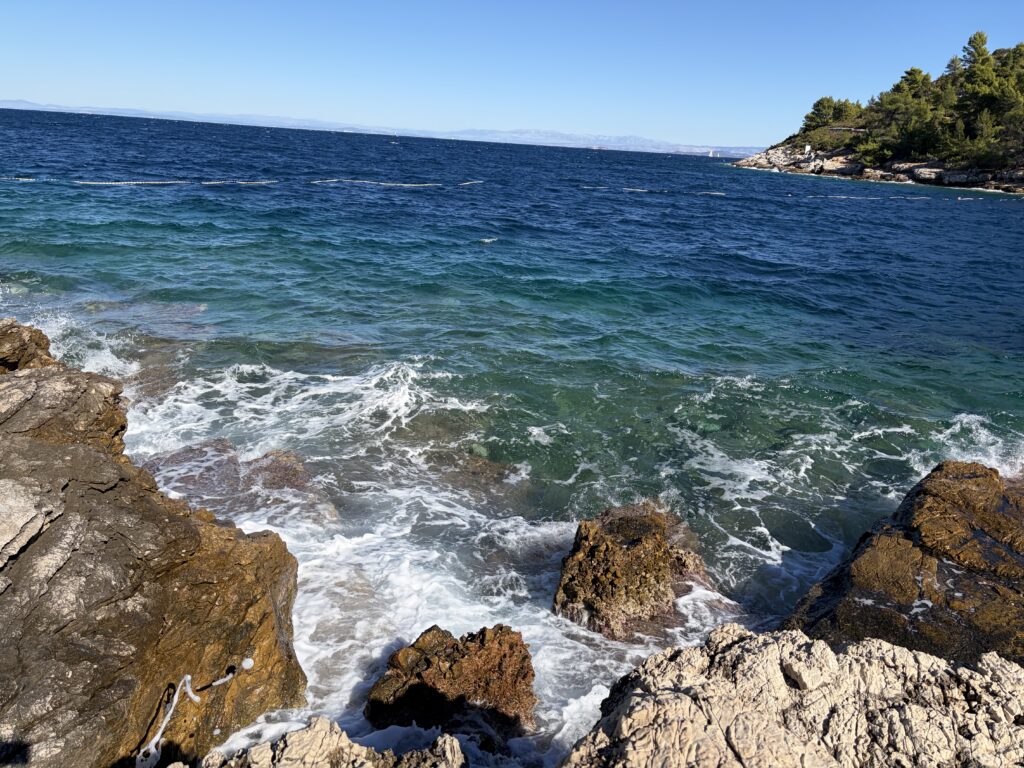
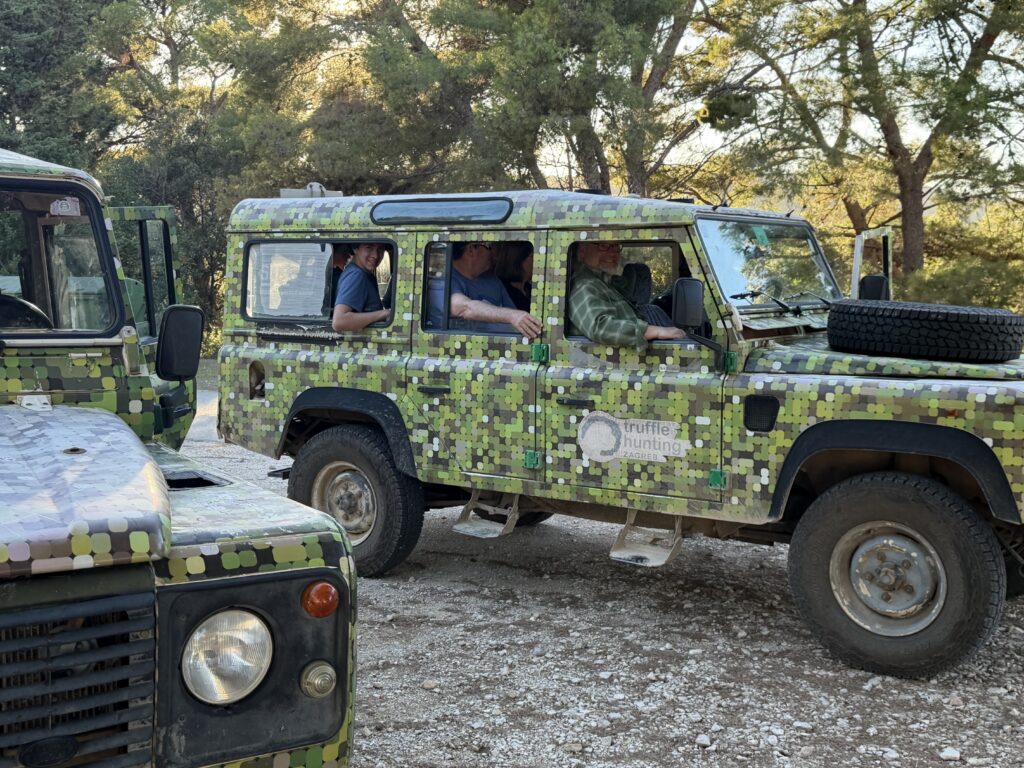
Then, we met our tour company, the ones driving five Land Rover Defenders, for the military base tour. After hearing about the history of Yugoslavia from our cruise manager (see below for a few details), it was clear this tour would provide so much context about the history of Croatia. The tour was a full sensory experience, great for the kids, and provided pieces of history about the water eras and the use of the island. The military bases have been decommissioned and are no longer active. In fact, the entire feeling throughout Croatia was one of peace and harmony.
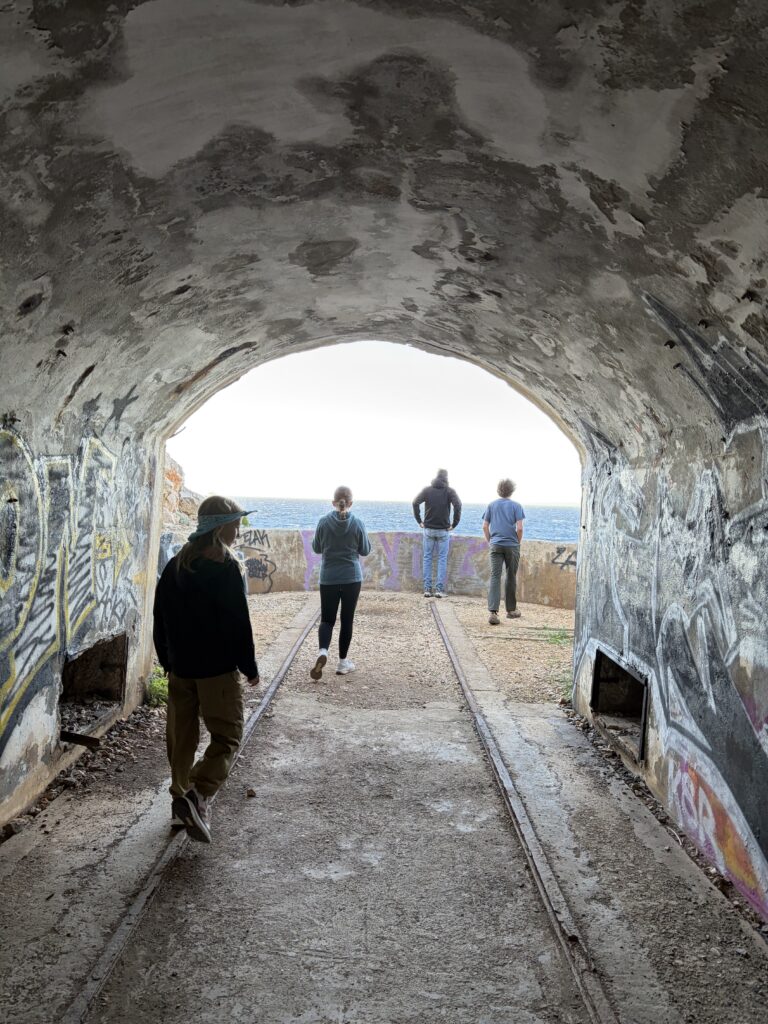
The people of Croatia are particularly aware of the effects of war as their homeland war ended just thirty years ago. This war never affected the island of Vis so it has been somewhat frozen in time. It was my favorite island, knowing there was so much more to explore. It is the most peaceful and quiet while still having full communities and self-sustaining industries. The beauty is stunning. Since we were still dealing with choppy waters that morning, we did not get to visit the Blue Cave. On top of everything else, this spectacular cave is on the nearby island of Biševo. Here are google’s thoughts on the island …
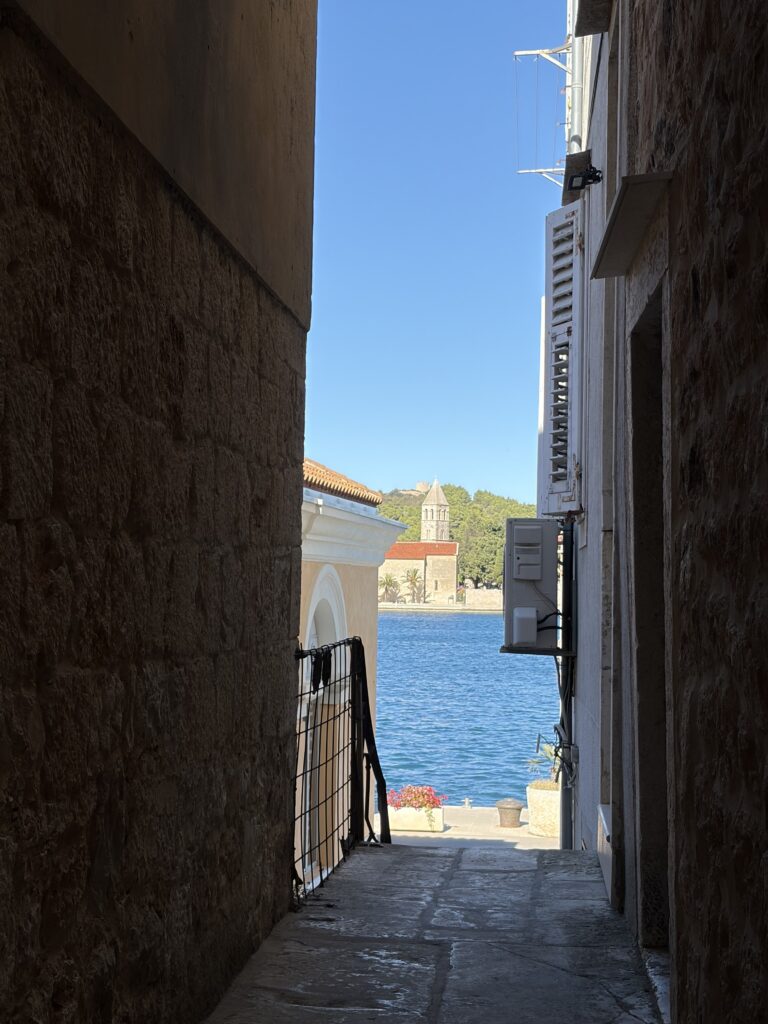
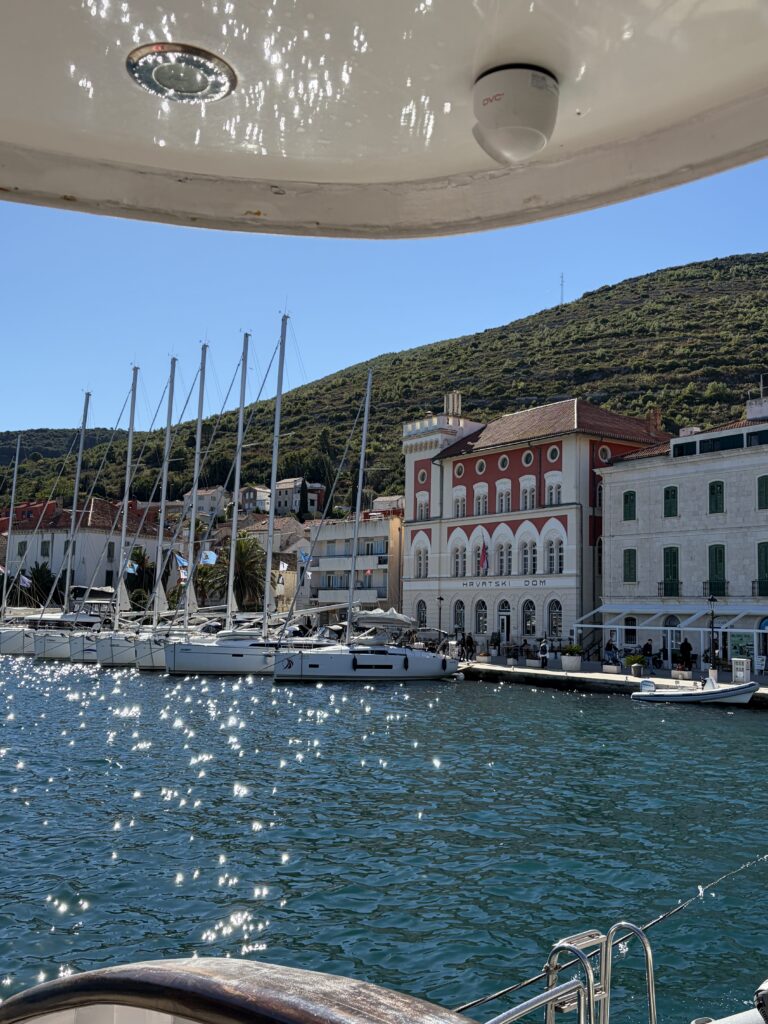
Vis: The furthest inhabited island from the mainland, celebrated for its unspoiled retro feel, the fishing village of Komiža, and natural wonders like the Blue Cave on nearby Biševo.
- History: Vis (Issa) was an independent Greek city-state that minted its own coins and founded colonies on the mainland. Due to its strategic offshore position, it served as a heavily fortified military base for the Yugoslav Army during the 20th century and was completely closed to foreigners until 1989.
- Culture: Because of its decades of military isolation, Vis preserved its slow-paced, authentic Dalmatian lifestyle. Its cultural heritage is split between its ancient winemaking roots (specifically the native Vugava grape) and deep-sea fishing traditions based in the town of Komiža.
Brač Island
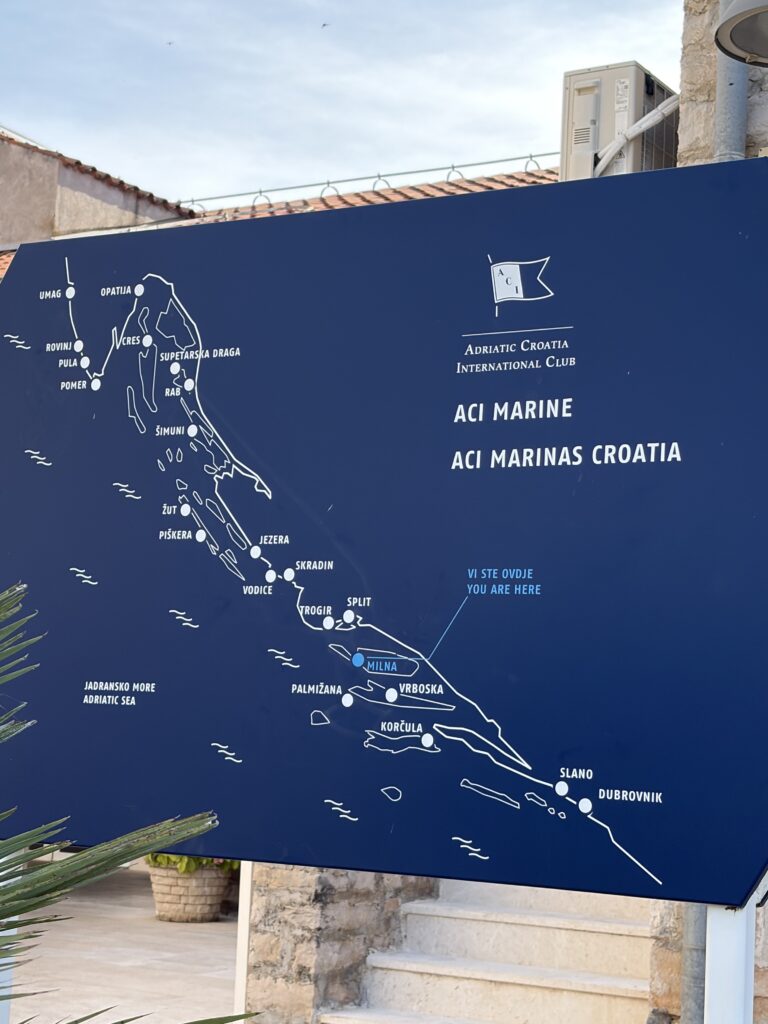
Milna (town)
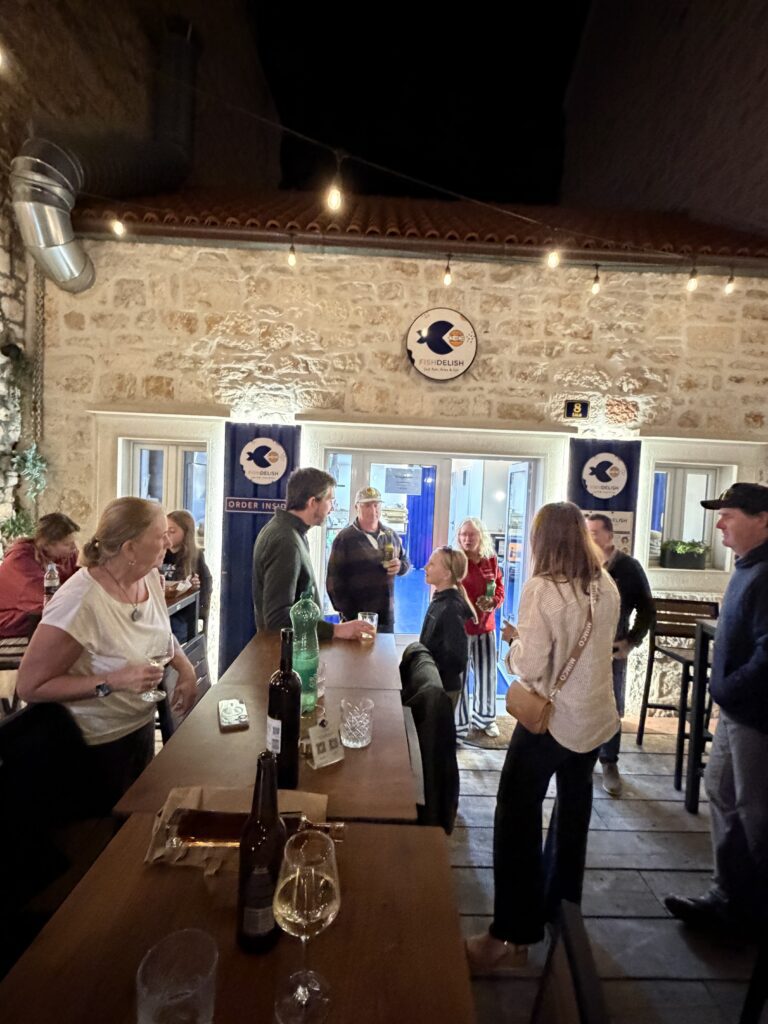
Milna was a sweet port, quaint and perfect in every way. We were able to have a swim stop in the morning. Emerson was the official queen of the boat toys – paddleboards, noodles, innertubes, and anything else she could find. She built a war ship for floating around the bay, complete with noodles as missiles and an inflatable bed as a throne on top of the paddleboard! Then, we docked in Milna for the afternoon and night. It was Eric’s birthday so this will be a special spot for our impromptu party at a local restaurant – we took over the patio with our boat-mates! The use of the island’s white limestone is impressive as it made the massive Diocletian Palace and the White House in Washington D.C..
- History: Brač was heavily utilized by the Romans, who established massive quarries to harvest its high-quality white limestone. This distinct stone was used to build Diocletian’s Palace in Split and, later, the White House in Washington, D.C.
- Culture: The island’s identity is anchored in stonemasonry. The town of Pučišća hosts a world-famous stonemasonry school that still teaches manual Roman-era cutting techniques. Brač is also highly agrarian, celebrated for its centuries-old olive oil production.
Split
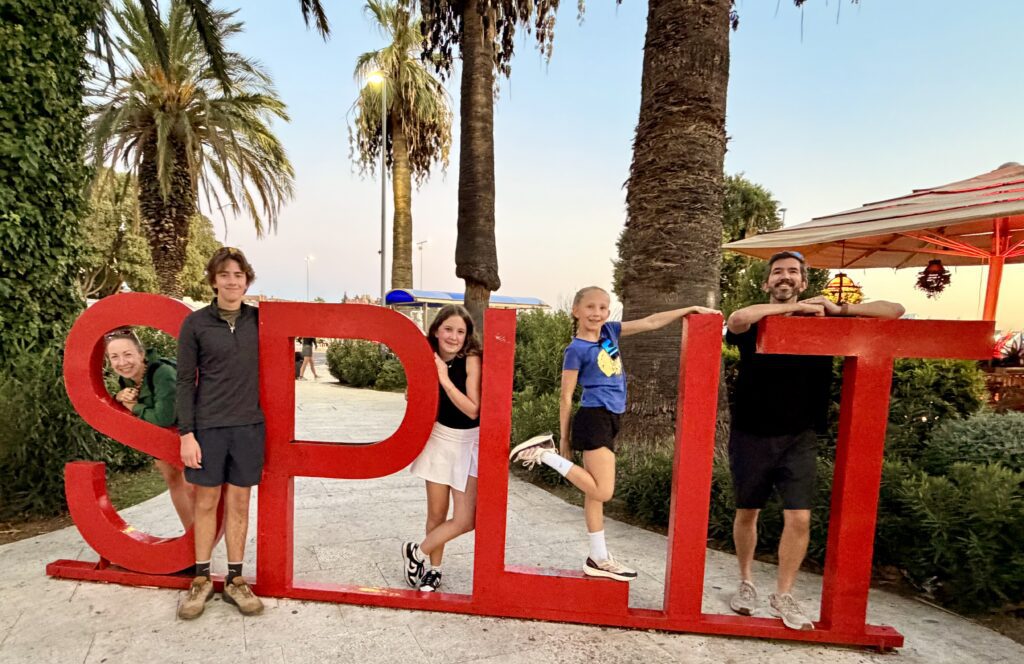
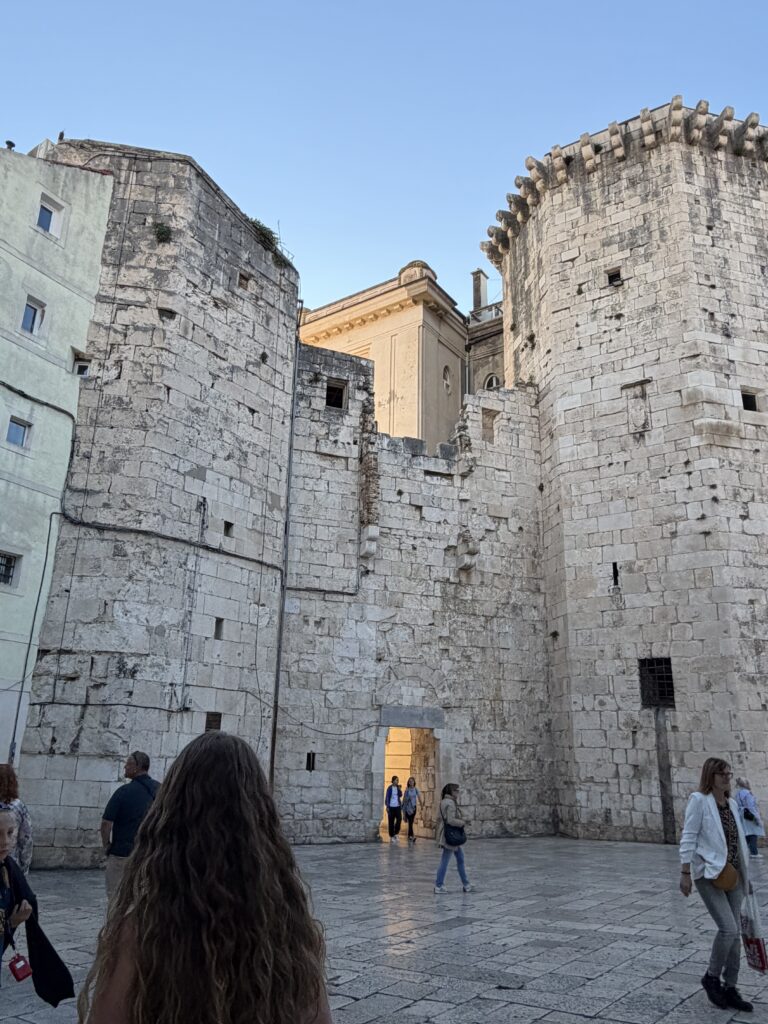
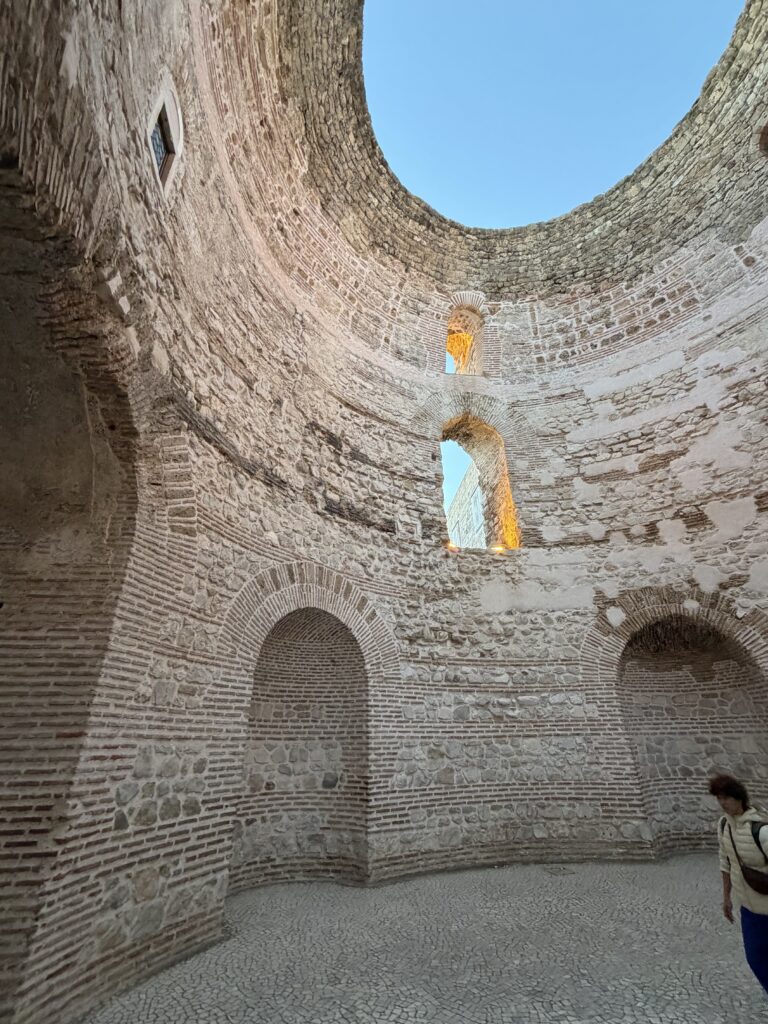
Despite being the second largest city in Croatia, Split is very approachable and reminded me of Rome with its endless possibilities and its accessibility for visiting each area. We only saw the area around Diocletian’s Palace, his retirement home, as it were. Our walking tour included entrance to the underground level of the palace, which I highly recommend. The imagination and skill in building technique is astonishing. Built in only ten years, this Roman place is massive and actually contains most of the historical city center nowadays. It would be easy to spend a week or two in Split – you could easily visit islands as daytrips from a base in Split. This was my favorite city on the mainland of Croatia.
- History: Split grew directly inside and around Diocletian’s Palace, a massive Roman fortress built by Emperor Diocletian around AD 305. In the 7th century, nearby refugees fled inside the palace walls to escape invaders, transforming the imperial residence into a fortified medieval city. Over the centuries, it evolved under Byzantine, Venetian, and Austrian rule into Croatia’s second-largest city.
- Culture: Split is a “living museum” where ancient Roman structures house modern apartments, shops, and cafes. Culturally, life centers around the Riva (the coastal promenade), open-air green markets, and traditional Dalmatian klapa (acapella) singing.
Trogir
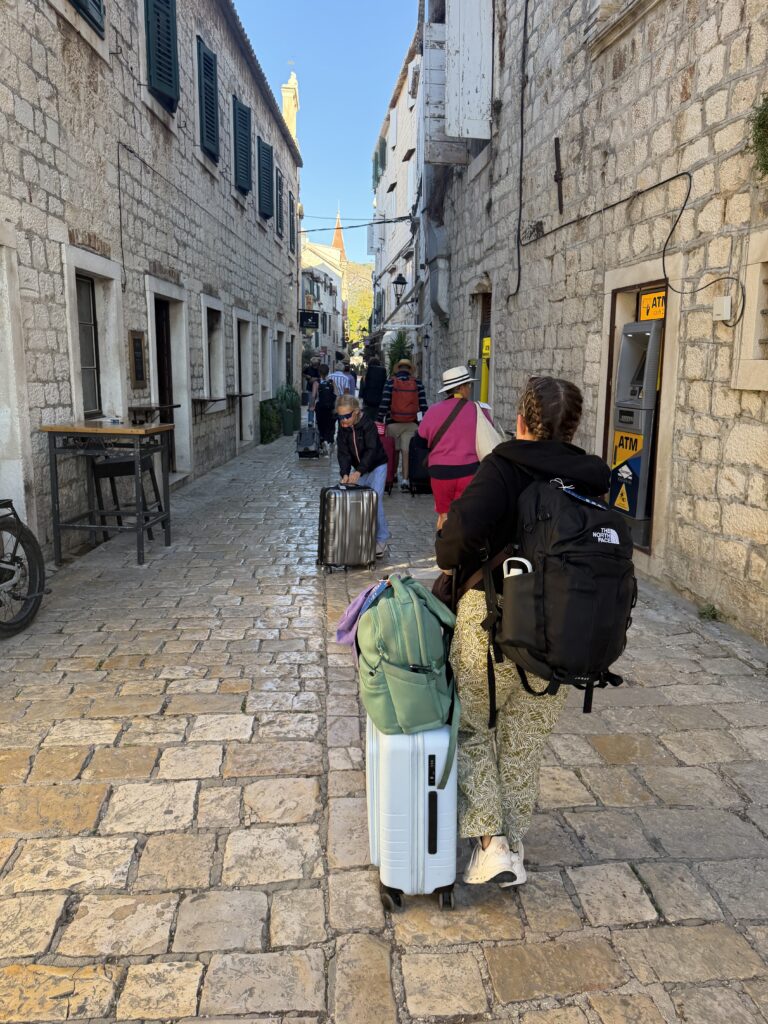
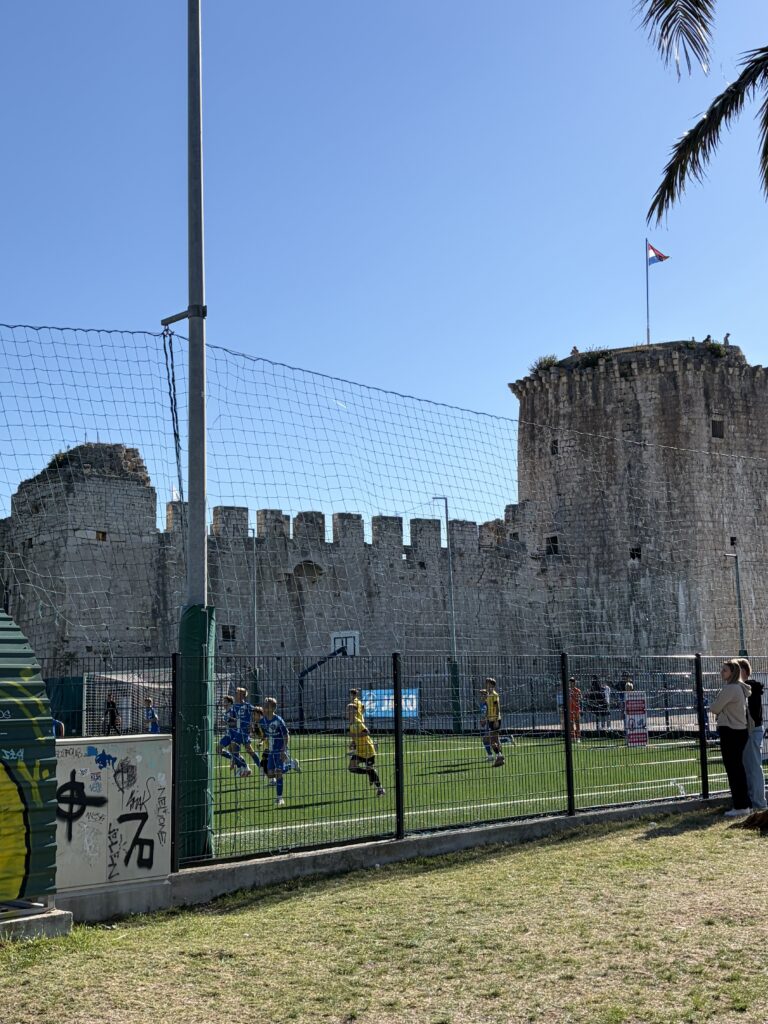
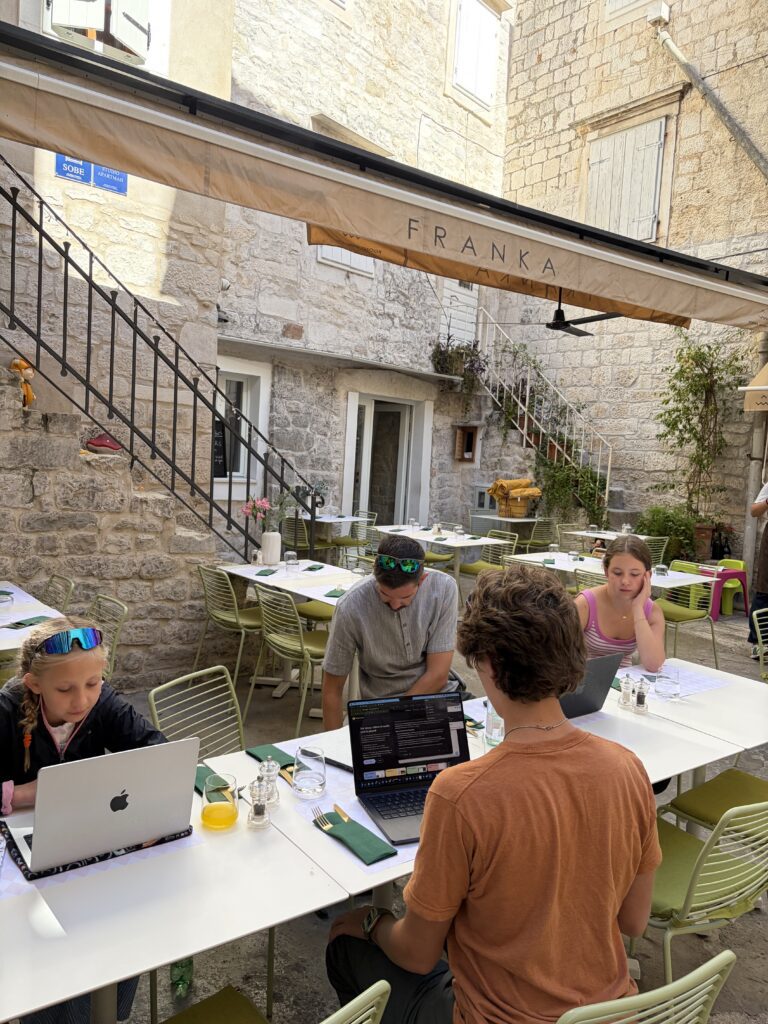
Trogir is the tiny neighbor to the north of Split, and it is actually closer to the airport. We spent our last day here before heading for the airport in the afternoon. After finding the local barber shop for a haircut for Eric, we strolled the tiny walking streets, finding gifts and snacks along the way. We realized we had another two hours before our shuttle and the kids needed to get back to some schoolwork, so we found a shaded patio. This particular shaded patio just happened to be attached to a Michelin star (woah!) family-run restaurant. We treated ourselves to brunch and a cocktail. They were so accommodating of us with our laptops and backpacks spread in between the chairs of our table. Luckily, it was early for the lunch rush so it was not crowded. We noticed several others started getting tables soon after (a crowd begets a crowd). I think a day is plenty for exploring Trogir unless you want to stay in a quaint and small town. We particularly liked visiting the park near the soccer field where a tournament was happening. It just so happens that this soccer field is literally underneath the medieval castle of the town. Where is the soccer game today? Oh, it’s at Castle Park. And, yes, yes, I mean football.
- History: Trogir was founded much earlier, in the 3rd century BC, as a Greek trading colony named Tragurion. It transitioned through Roman and Byzantine rule before experiencing a cultural golden age under Venetian rule from the 15th to 18th centuries, which shaped its intact historic core.
- Culture: Trogir is an intimate, pedestrian-only island town celebrated as Central Europe’s best-preserved Romanesque-Gothic complex. Its culture is defined by its rich stone-carving heritage, labyrinthine medieval alleys, and a relaxed, seafaring atmosphere along its waterfront.
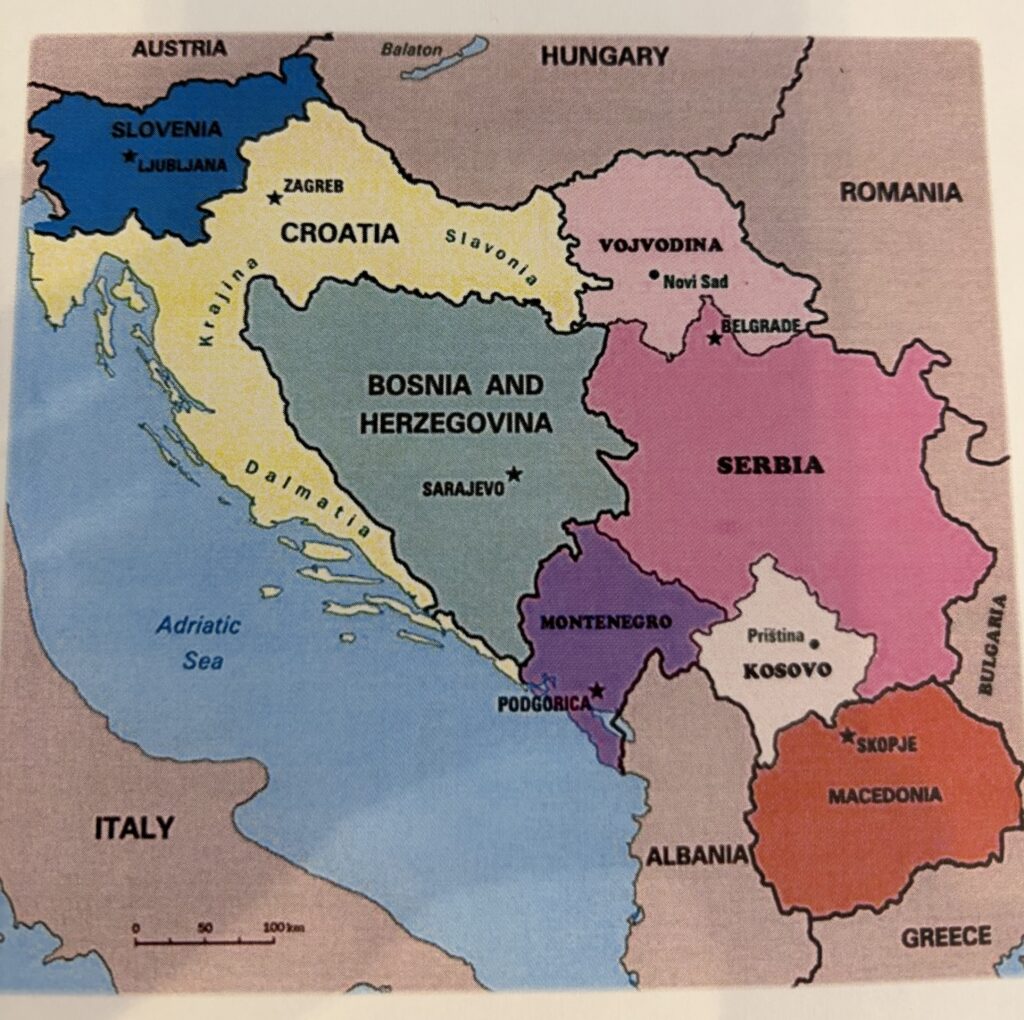
Former Yugoslavia History: There is so much history that everyone should study, and this is woefully incomplete, but it feels like an injustice if I do not provide at least a few pieces of the information we learned:
- 6 Republics (plus 2 areas attached to Serbia) – 1945-1991 – very mild socialism that supported the people
- Dividing line through the middle – west side was Roman Catholic and east side was Orthodox
- Sanja (our cruise manager) leads tours to Albania, Montenegro and Macedonia – she had to take Marxism for 3 years in school and have military training; she was 22 when the homeland war started in 1991
- Albania was closed for 50 years (socialism) and it is a Muslim country but very European now
- Montenegro is incredibly beautiful because it is small and you can see beaches, mountains, canyons all in small land area
- Base languages from Latin (except Hungarian that has its own root)
- Illyrian tribes (BCE) and then Greek and then others
A few more tidbits of the Croatian language:
Hrvatska is how to say Croatia
Palarka – let it be
Fiojka – you pretend to be doing something but really you are doing nothing – on purpose
2 Responses
Hi Annie
Found a walking route for London’s Christmas lights which might work for your family and hits several of the key places to visit.
Have sent a link on the Croatia group WhatsApp as the link wouldn’t attach here
Vx
Thank you!